
How running agencies inspired us to build Bripes & Sharebrand
After years running design agencies and trying ManyRequests and SPP, we built Bripes and Sharebrand. Here's what we learned and why we built our own tools.
Tired of choosing between features and price?
Bripes combines ManyRequests' design workflow with SPP's growth features—without the $1,500 white-label fee. See why agencies switch.
Try Bripes freeRunning a design agency shouldn't require a computer science degree just to manage your tools.
But that's exactly what it felt like for years. We tried every client management platform, every file sharing service, every project management tool on the market. Some were too complicated. Some were too expensive. Most were built for enterprise teams with dedicated ops departments—not small agencies trying to serve clients and make payroll.
Eventually, we stopped looking for the perfect tool and built our own.
This is the story of Bripes and Sharebrand—the two platforms we created to run Renlar (and our other agency ventures since 2018). It's also the story of why we're still building them today.
Part 1: The Project Management Journey (2018-2024)
The tool-hopping years
When we started our first agency in 2018, we did what every new agency does: we used the popular tools everyone recommended.
First, we tried Trello. Simple. Clean. Easy to use. But way too basic for complex client work. When you're managing 10+ clients with multiple projects each, Trello cards just don't cut it.
Then we tried Asana. More powerful than Trello, but confusing for clients. They'd log in, see a million features they didn't understand, and email us asking how it works. We spent more time explaining the tool than delivering work.
Then we tried Monday .com. Beautiful interface. Tons of features. But $1,200/year for our team size? And we'd use maybe 15% of those features? It felt like paying for a Ferrari when we just needed a reliable Honda.
The pattern was clear. Every tool was either too simple like Trello, too confusing like Asana, or too expensive for what we needed like Monday. They were all built for enterprise companies or internal teams—not for client-facing creative work.
The ManyRequests era (2022-2023)
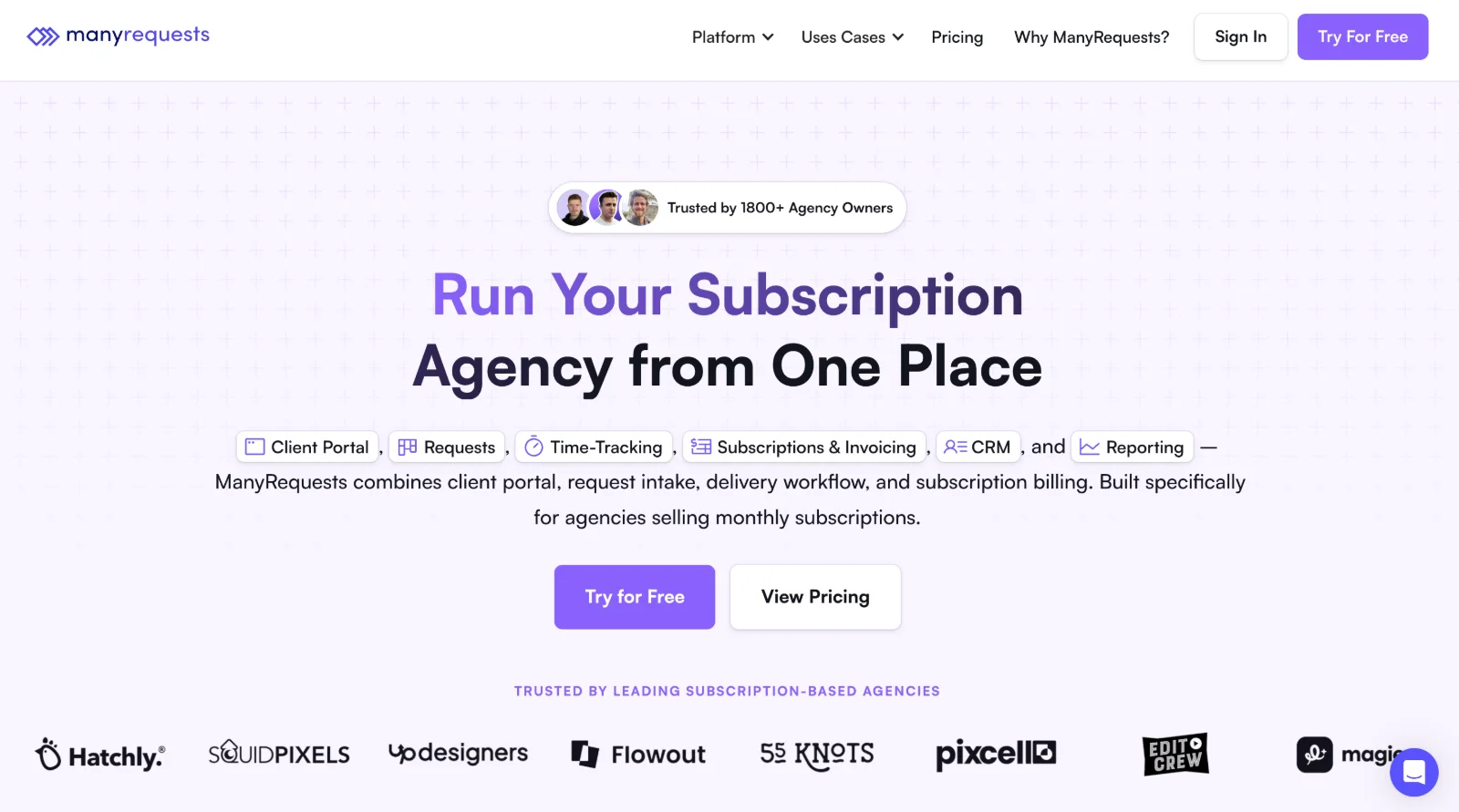 Then we discovered ManyRequests, built by a fellow agency owner. Finally! A tool that understood agencies. It was affordable, not $1,200/year. Simple enough for clients to use. Built for design and creative work. Actually made by someone who ran an agency.
The project management was incredible for design agencies. ManyRequests had features we'd never seen anywhere else. Their advanced preview system let clients see designs directly in the app. No more downloading files and opening them separately. The point-and-click feedback feature was revolutionary—clients could click on specific parts of a design and leave comments right there. No more "see attached screenshot with red circles drawn in MS Paint" feedback.
This was exactly what design agencies needed. We loved it. Migrated everything. Used it for over a year.
But then we started growing.
As we scaled, we hit ManyRequests' limitations. The branding was the first issue. ManyRequests had a basic option to remove their branding, but everyone could still tell you were using it. Every checkout page looked identical across all ManyRequests agencies. The design was acceptable, but when you're selling design services, having a generic-looking portal didn't feel right.
The bigger problems emerged as we tried to scale. ManyRequests had basic client management, but no proper CRM. It collected feedback from clients, but there was no way to showcase reviews publicly. Clients would give us great feedback, but we couldn't display testimonials anywhere. There was no option to add conversion tracking scripts, which meant we couldn't run affiliate campaigns or track performance properly. No custom code insertion meant limited external integrations.
ManyRequests was perfect for running a small design agency. But it wasn't built for growing one.
The SPP experiment (2023-2024)
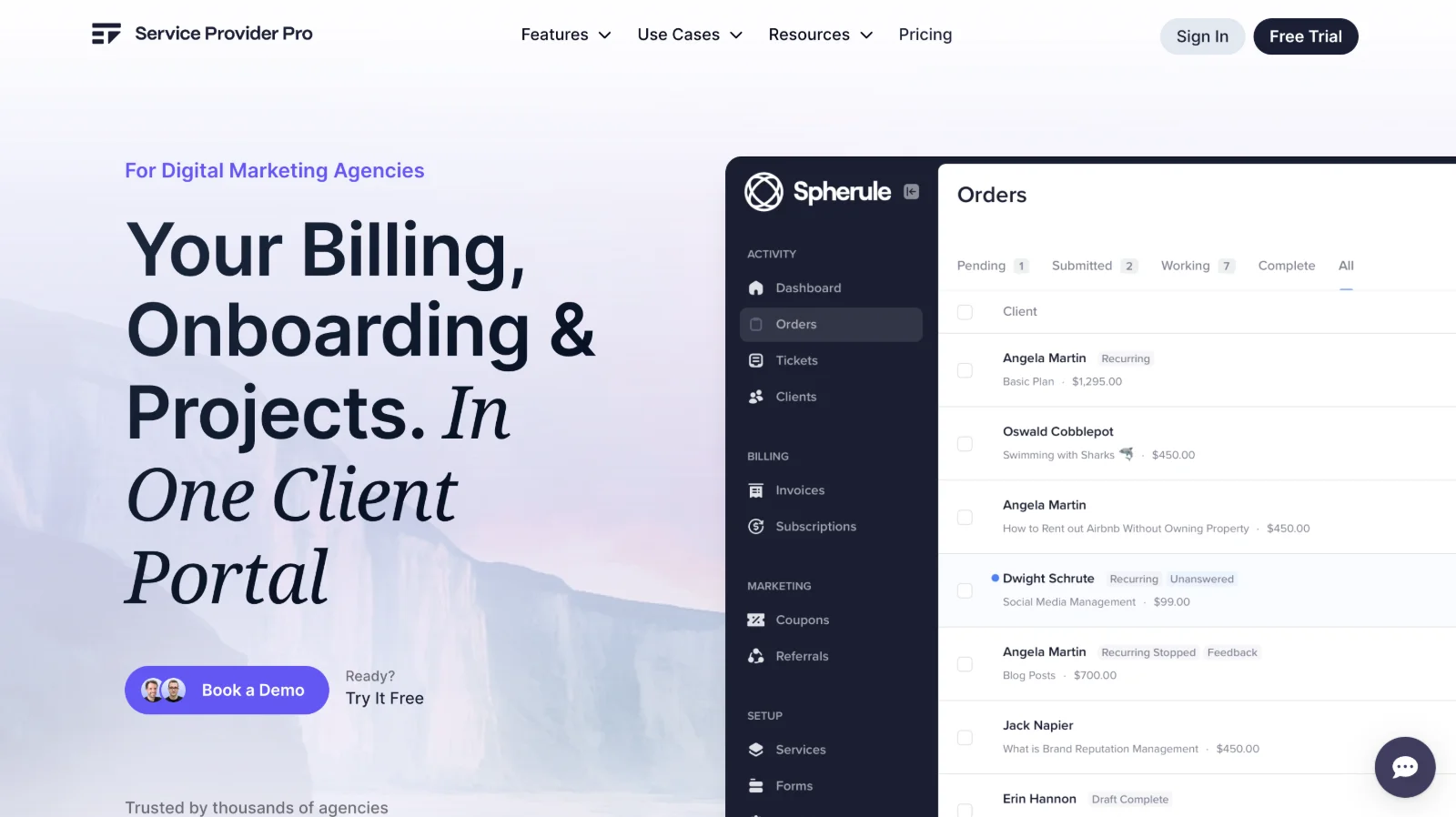 So we switched to SPP (Service Provider Pro).
SPP had all the growth features we desperately needed. Full CRM and contact management. Client onboarding automation. Staff management. Business hours and scheduling. Advanced reporting. But the game-changer was custom code insertion—we could add conversion tracking scripts, optimize checkout pages, run affiliate campaigns. The UI was also way cleaner than ManyRequests, with a minimal design that felt more professional. It connected with everything we needed through external integrations.
This was powerful. This was exactly what we needed to grow.
But there was a catch: the cost. SPP had white-label options, but you needed to pay at least $1,500 to remove their branding. Below that price point, we had "Powered by SPP" everywhere. For a growing agency, $1,500/year was steep. But the real problem wasn't the cost—it was what the tool was built for.
SPP was designed for SEO and marketing agencies, not design agencies. It had features SEO agencies loved like rank tracking, keyword reports, link building management, SEO audit tools, and campaign performance tracking. These were great if you ran an SEO agency. But we didn't.
What SPP was missing for design agencies was everything that made ManyRequests perfect. No advanced preview system for designs. No point-and-click feedback on creative work. No visual project boards optimized for creative approvals. The whole workflow was built for marketing deliverables, not design files.
The white-label reseller problem was particularly frustrating. SPP had white-label reselling, but it was limited in a backward way. We could resell our services through other agencies, but those agencies had to become SPP clients to use the white-label feature. We basically sent potential partners to SPP. SPP got new customers, we got nothing—no profit sharing. We were growing SPP's customer base for free. Every time we tried to work with a reseller agency, we had to introduce them to SPP, help them sign up, and train them on a platform we didn't control. It felt backward.
The impossible choice
Let me break down what we were facing.
ManyRequests had perfect project management for design work with its advanced preview and point-and-click feedback. It was built specifically for creative agencies and had affordable pricing. But everyone knew you were using ManyRequests, there was no proper CRM, you couldn't showcase client reviews, there was no conversion tracking or custom scripts, and integrations were limited.
SPP had a clean, minimal UI that looked great. It offered full CRM and client management with custom code insertion for tracking. External integrations worked perfectly, and it had everything you needed for growth and marketing. But white-label cost $1,500 minimum, you had "Powered by SPP" everywhere below that price, it was built for SEO agencies rather than design work, there was no design preview or point-and-click feedback, and the white-label reselling model sent agencies to SPP without any profit sharing.
We faced an impossible choice. Use ManyRequests and have perfect design work but can't grow with it. Or use SPP and have growth features but the wrong workflow for design agencies. Both were excellent software. Neither was perfect for us.
The hard decision
We did the math. We talked to our team. We looked at our growth plans.
And we decided to build our own.
People thought we were crazy. "Just pick one tool and deal with it," they said. "Building software is expensive and time-consuming."
They were right about that last part. But after years of compromising, we knew exactly what we needed—and it didn't exist anywhere.
Building ProRequests → Bripes (2024-Present)
The development journey
The timeline was longer than we expected. We started design and planning in early 2024. Development began mid-year. By late 2024, we had our first beta and migrated from SPP. We officially launched as "ProRequests" in November 2024, then continued building features and gathering feedback throughout 2025. By late 2025, we rebranded to "Bripes."
Why "ProRequests" first? We wanted to emphasize that we're the professionals of requests—handling client requests better than anyone else. But as we added more features beyond simple project management like agreements, copyright management, CRM, and white-label reselling, we needed a name that represented growth, not just requests. That's when we became Bripes.
What we built
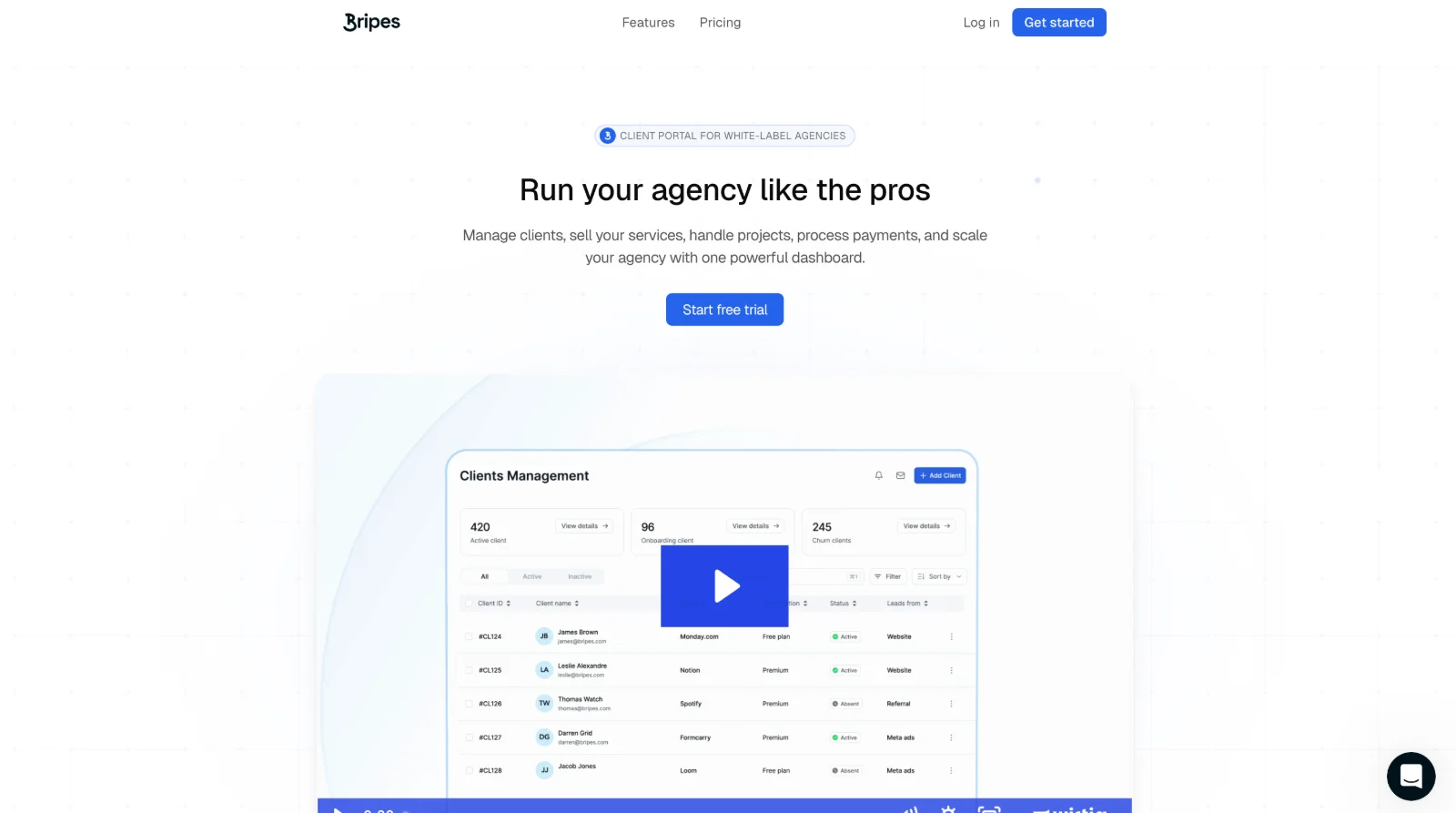 Bripes started by combining the best of both platforms. From ManyRequests, we kept the advanced design preview system, point-and-click feedback on creative work, simple client request submission, design-agency-friendly interface, and affordable pricing model. These features were too good to lose.
From SPP, we added full CRM and contact management, custom code insertion for conversion tracking and scripts, clean minimal UI design, external integrations, client onboarding automation, staff management and assignments, and business hours and scheduling. These growth features were essential.
Then we added what both were missing. True built-in white-label without the $1,500 extra charge. Client agreements and contracts. Copyright and IP management. A review and testimonial showcase system. And the big one: true white-label reselling where partners stay your clients, not ours.
The true white-label difference
Remember how SPP's white-label reselling forced us to send agencies to SPP? We fixed that completely.
In Bripes, reseller agencies are your clients, not ours. They stay inside your workspace as sub-clients. They never see or interact with Bripes. You don't introduce anyone to us.
Here's how it works. Each agency plan includes 20 reseller agency slots. Need more? Just $20 per additional reseller. There's zero mention of "Bripes" anywhere in their experience. They think they're using your software.
This is true white-label. Not "white-label if you pay $1,500" or "white-label but we get the customer relationship." Your resellers are your clients. Your brand. Your relationship. We stay completely invisible. That's what agencies actually need.
Why we keep building it
Six months after launch, we're still actively building Bripes because we use it every single day at Renlar and our other ventures. Every pain point we hit becomes a feature we build. Other agencies give us feedback that makes it better. We're not done growing, so the tool keeps evolving.
Bripes isn't a side project. It's the infrastructure that runs our businesses. If you want to run an agency and grow on your own terms, check out bripes.com.
Stop embarrassing yourself with Dropbox links
Share files under your own brand. No "Powered by" anywhere. No recipient signups. No per-user fees. Just professional delivery.
Try Sharebrand freePart 2: The file sharing problem (Late 2023 - 2024)
The Dropbox disaster (April 2024)
I'll never forget the day I decided to build Sharebrand. It was April 2024. I was checking a file link (pCloud) one of our team members had shared with a client. Nothing unusual—just part of my normal workflow. I clicked the link.
Popup after popup. "LIMITED TIME OFFER!" "UPGRADE TO LIFETIME DEAL!" "BUY NOW BEFORE IT'S TOO LATE!"
Are you kidding me? This is the first impression our clients get when we share files with them? A cloud storage provider basically screaming "BUY OUR STUFF!" in their face? No. Just... no.
The expensive alternatives
Okay, let's try Dropbox. $15 per user for my team of 30 designers, both in-house and contractors. That's $450/month. Over $5,000/year. Sure, they have some branding features. But they also come with a ton of features we don't need. Great for some businesses. Not for us.
What about Box? $15-25 per user for 30 people. Even worse. They have a starter plan, but it's super limited—only 100GB of storage and max 10 team members. Back to square one.
We already use Google Workspace, but only a few team members have Google accounts. The rest use Zoho because it's cheaper. To get decent storage and team control with Google, we're looking at $18/month per user.
Our budget was already stretched thin with Slack, Figma, Adobe for some designers, Deel for contractor payments, Remote for international payroll, and SPP at the time for project management. Gerald, my co-founder, is strict about new subscriptions. He hates them. Adding another $450-500/month tool would eat our small profits alive.
And none of them gave us true white-label. We wanted clients to download files from our branded portal—our name, our logo, our domain. Not "Dropbox.com/renlar" or "box.com/s/renlar." That solution didn't exist.
The lightbulb moment
After weeks of frustration, it hit me. "Cloud" plus "Brand" equals Cloudbrand. We'd build our own white-label file sharing platform for agencies. The .com was $15,000, which was insane, so I grabbed .co, .io, and some alternatives like trycloudbrand.com and cloudbrandhq.com. Still looking to buy the .com someday, but we need MRR first!
Building Cloudbrand → Sharebrand (2024-Present)
Assembling the team
I reassigned Ben, one of our project managers, to lead this project, along with two product designers. We started working on designs in June 2024.
While we designed, Ben searched for a developer experienced with MVPs. First developer was a popular guy on X, formerly Twitter. Thank God he never replied—we dodged a bullet there. The second developer seemed like a good match. Ben assured me he wasn't a "joker," which is our term for someone who talks big but delivers nothing.
My co-founder and I agreed to finance the project. The deal seemed fair. We signed a contract and paid him.
The stressful waiting period
Then came the silence. Weeks went by without much news. As an agency owner used to 1-2 day turnarounds, this was torture. But I reminded myself that good things take time. He's a professional. Trust the process.
While we waited, we didn't just sit around. We built a landing page describing what we were building. Created Dropbox and WeTransfer alternative pages. Submitted everything to Google for indexing. We figured we might as well start building SEO while the app was in development.
The accidental preview
A few weeks later, I searched for "Cloudbrand" on Google. Wait. What's this? Another landing page. An exact copy of ours. On a domain we didn't own.
I immediately suspected our developer. Sure enough, I was right. He had started building and included our landing page on his staging server. But when I saw the login page—with our app name and logo—we were over the moon. It was the first time we saw Cloudbrand coming to life.
Gerald got so excited he started daydreaming about our future MRR. I had to laugh. The app wasn't even ready, and he was already counting our revenue!
Scope changes and launch
As we collaborated more with the developer, we realized we needed to change the scope significantly. We negotiated an extension beyond our initial agreement, and thankfully, he gave us another fair deal.
The complete timeline ran from April 2024 when frustration with pCloud made us decide to build, through June when design started, mid-2024 when development began, October when the first beta went live and we registered Cloudbrand in Delaware via Stripe Atlas, late 2024 when Renlar fully migrated to Cloudbrand, and finally 2025 when we rebranded to "Sharebrand"
Total time was 7 months from brainstorm to MVP. Some people thought it should've been faster. But I'm glad we took our time. We didn't use boilerplate templates. We built something we're proud of.
Why "Sharebrand" instead of "Cloudbrand"?
As we used the platform, we realized we weren't building cloud storage. We were building branded file sharing.
Dropbox stores files. Google Drive stores files. We don't compete with them. We make file sharing look professional. Your files can live wherever you want. Sharebrand just makes the delivery experience match the quality of your work. The rebrand to "Sharebrand" made that clear.
What we built (and why it's different)
Sharebrand core features
True white-label means your logo, your colors, your domain. Clients never see "Sharebrand" anywhere. They get professional branded download pages.
Payment protection lets you lock files until payment is received or sell digital products directly.
Collect payment before file access.
No recipient accounts means clients click a link and download files. No signup required. No confusing dashboards.
No per-user fees means you can add your entire team. One flat price. No mounting costs as you grow.
Built for agencies means simple file upload, branded delivery pages, client download tracking, and a professional experience from start to finish.
How we use it at Renlar
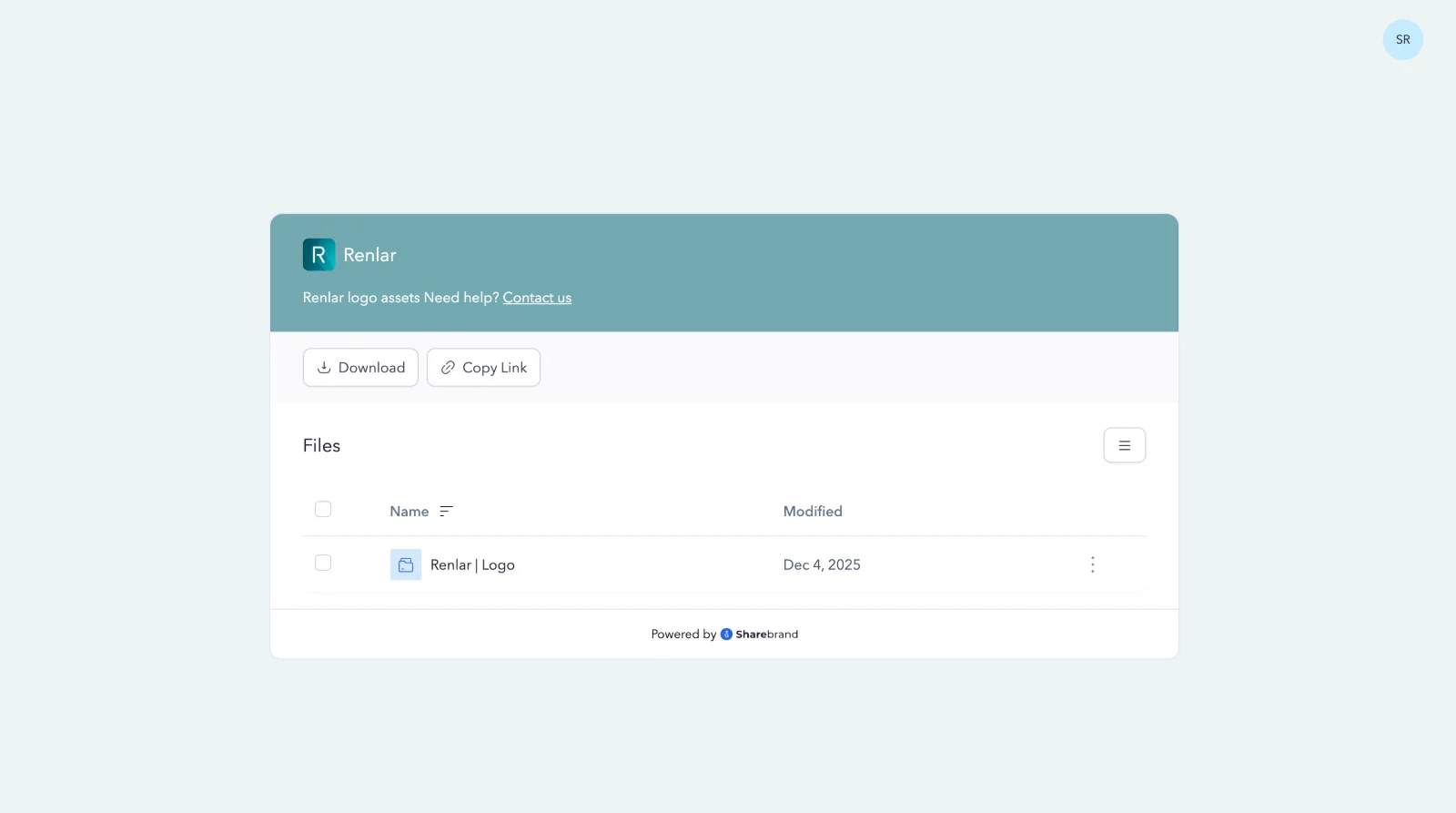 Before Sharebrand, clients clicked generic Dropbox links and saw third-party branding and ads. It left an unprofessional final impression.
After Sharebrand, clients visit https://files.renlar.com/t/unique-file-id. They see our logo and branding. They download files in a clean, professional experience. We look like a premium agency because we are. The difference is night and day. Multiple clients have told us our file delivery looks more professional than other agencies they've worked with. That's exactly what we wanted.
The marketing website: Built with Corenn
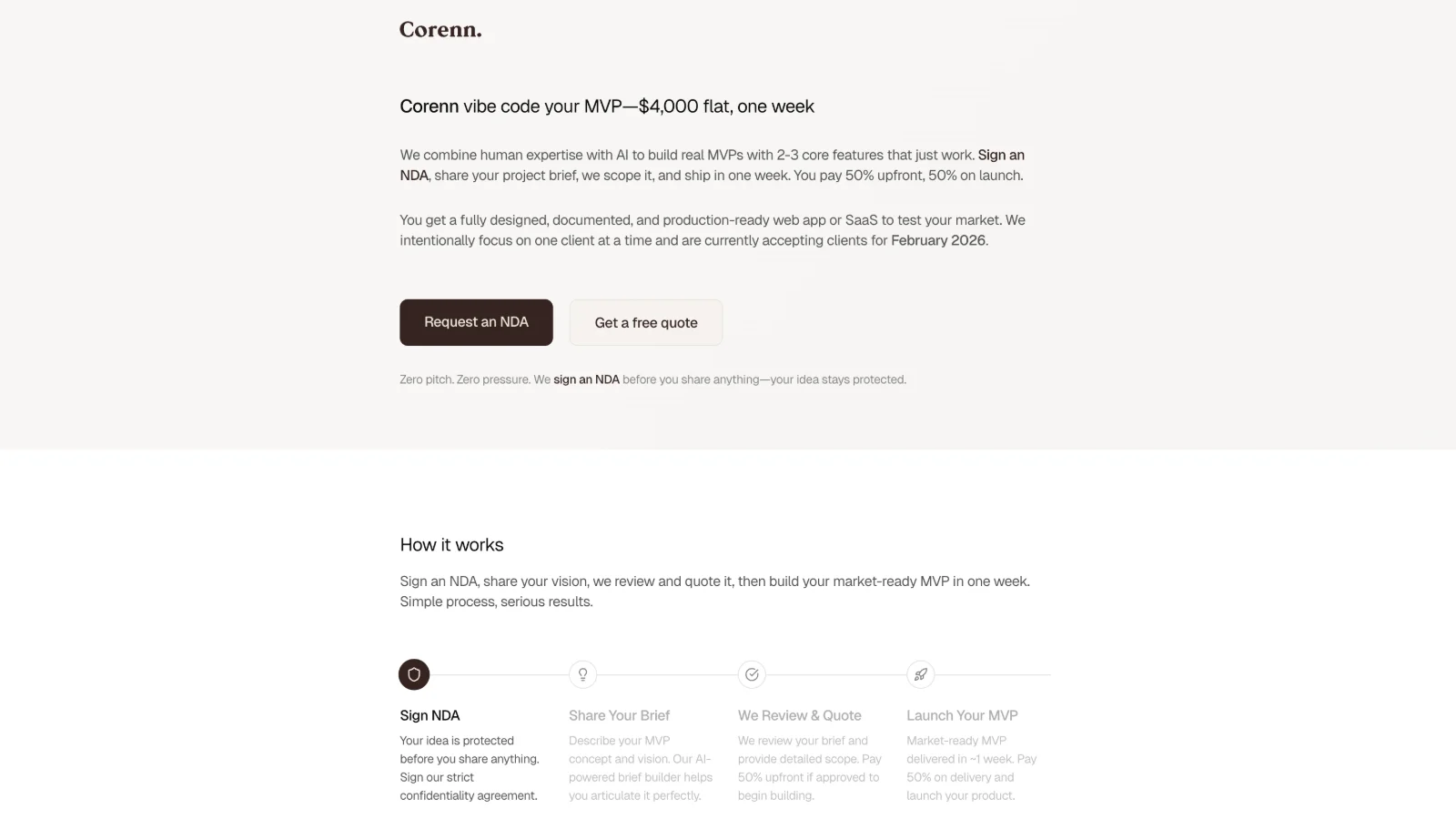 Quick aside. The marketing website you're reading this on, renlar.com, was built with Corenn, our rapid MVP development service.
We needed to rebrand from "Reel Unlimited" to "Renlar" and rebuild the entire marketing site—fast. Corenn delivered a custom Next.js website in one week for $4,000 flat. Full custom design, blog system, help center, marketing tools, mobile-responsive, deployed on Vercel. No templates. No WordPress. Just clean, production-ready code we own.
If you need an MVP or marketing site built quickly without compromising quality, check out corenn.com.
What we learned building our own tools
You don't need perfect, you need "good enough to ship." We could've spent another 6 months adding features before launching. But shipping early and iterating based on real use was way more valuable.
Building for yourself makes better products. We use Bripes and Sharebrand every single day. Every pain point we encounter becomes a feature we build. That's why they work so well—we're our own customer.
Enterprise tools aren't built for small agencies. Most SaaS platforms are built by engineers who've never run agencies. They build features engineers think are cool, not features agencies actually need.
White-label shouldn't cost enterprise prices. Big platforms charge $500+/month for white-label features. That's insane. Small agencies need professional tools without enterprise budgets.
Don't underestimate development time. We thought Sharebrand would take 3-4 months. It took 7. Software always takes longer than you think. Budget accordingly.
Good developers are worth every penny. We got lucky with our developer for Sharebrand. A bad developer would've wasted our money and time. Do your research. Pay fairly. Treat them well.
Our current tech stack (2026)
Client and project management runs on Bripes. File sharing and delivery uses Sharebrand. Our marketing website was built with Corenn using Next.js on Vercel. Design work happens in Figma. Team communication goes through Slack. Email runs on Zoho Mail for most team members and Google Workspace for admin. Contractor payments process through Wise, Deel. Payments integrate with Stripe through Bripes.
Why we're sharing this
Other agency owners ask me all the time. "What tools do you use to run Renlar?" "How do you manage so many clients?" "How do you make file delivery look so professional?"
Instead of gate-keeping, we made Bripes and Sharebrand available to other agencies. We didn't build these as "products to sell." We built them to solve our own problems. But once they existed, it made sense to share them.
Bripes helps agencies grow without expensive enterprise tools. Sharebrand helps agencies deliver files professionally. Corenn helps startups build MVPs fast. We use them. They work. Maybe they'll help you too.
Try them yourself
Bripes is a client portal for agencies that want to grow. Visit bripes.com for a free trial. Built by agency people, for agency people.
Sharebrand provides white-label file sharing that doesn't embarrass you. Try it at sharebrand.io with a free trial. Share files under your brand, not ours.
Corenn delivers production-ready MVPs in one week. Check out corenn.com for $4,000 flat pricing and one week delivery. No templates, no compromises.
Final thoughts
We didn't set out to become a software company. We just wanted to run our agency without fighting our tools. But after years of expensive subscriptions, complicated platforms, and features we'd never use, we made a choice: build what we actually need.
Bripes took 6 months to build and we're still improving it based on our daily use. Sharebrand took 7 months from frustration to launch. Corenn built our marketing website in one week. All three solve real problems we faced. All three are tools we use every single day.
If you're running an agency and tired of tools that don't fit, try what we use. We built them for people like us.
Published on renlar.com in January 2026. This blog post reflects our actual journey building software to run our agency—the frustrations, the failures, the wins, and the lessons learned along the way.
Ready to scale your business?
Get professional design and development capacity without hiring overhead. Consistent quality, predictable costs, always available.
Get started